Islamic dreams guide content can help you understand dreams through an Islamic perspective. Dreams can feel deeply personal, emotional, and sometimes confusing. Some dreams may reflect your daily thoughts, fears, hopes, or experiences. Others may feel meaningful because of their strong spiritual or emotional impact.
In Islam, dreams are not all understood in the same way. Traditional Islamic teachings distinguish between different types of dreams. Some may bring comfort, while others may come from personal thoughts or cause distress.
This guide explains Islamic dream interpretation in a balanced way. It also explores spiritual symbolism, emotions, and psychological factors. Dream meanings can vary based on the person and the situation. Therefore, one symbol should not be treated as a fixed prediction.
Use this guide for reflection rather than fear. A dream does not automatically predict what will happen in your future.
⭐ Quick Answer
An Islamic dreams guide can help you understand dreams through Islamic teachings, personal emotions, and common symbolism. Islamic tradition recognizes different types of dreams, so every dream does not have a spiritual message.
What Does Islamic Dreams Guide Mean? 🌙
An Islamic dreams guide refers to a framework for understanding dreams from an Islamic perspective.
Dream interpretation has a long history in Islamic scholarship. However, interpretations can differ depending on the dreamer and circumstances.
Common ideas include:
- Meaningful dreams: Some dreams may bring comfort or encouragement.
- Disturbing dreams: Some dreams may cause fear, sadness, or confusion.
- Personal thoughts: Dreams can reflect daily experiences and strong emotions.
- Symbolic dreams: Certain dreams may contain symbols that require careful interpretation.
- Spiritual reflection: Dreams can encourage a person to think about their faith and actions.
- Emotional processing: A dream may reflect worries that remain in the subconscious.
The same symbol can have different meanings for different people.
Spiritual Meaning of Islamic Dreams Guide 🕊️
From an Islamic perspective, dreams should be approached with humility and care.
Traditional Islamic teachings describe different sources or types of dreams. A pleasant dream may bring comfort, while a frightening dream should not automatically be treated as a prediction.
Spiritual reflection may include:
- Thinking about your relationship with Allah.
- Reflecting on your recent actions and emotions.
- Seeking comfort through prayer and remembrance.
- Avoiding fear-based interpretations.
- Asking a trusted and knowledgeable person when appropriate.
- Remembering that only Allah knows the unseen.
Dreams should not become a replacement for religious guidance or sound judgment.
Spiritual Signs to Consider
A dream may feel spiritually important when it strongly affects your emotions. Still, emotional intensity does not prove a supernatural message.
Consider asking:
- What emotions did the dream create?
- Have I recently experienced something similar?
- Does the dream remind me of a personal concern?
- Does it encourage positive reflection?
- Am I interpreting it because I am afraid?
These questions can help you approach the dream calmly.
Psychological Interpretation of Islamic Dreams 🧠
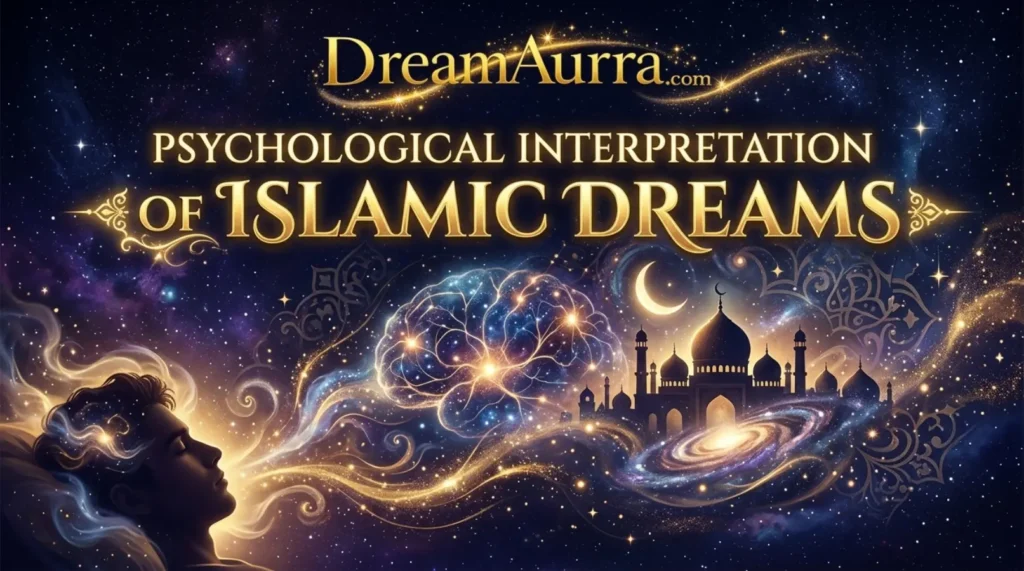
Dreams can also reflect the subconscious mind.
Your brain continues processing memories and emotions during sleep. Recent events may appear in strange or symbolic forms.
Common psychological factors include:
- Stress from work or school.
- Relationship concerns.
- Fear about an uncertain situation.
- Strong personal desires.
- Recent conversations or experiences.
- Unresolved emotional issues.
- Changes happening in your life.
For example, dreaming about being lost may reflect uncertainty. It does not necessarily predict that you will become lost.
A psychological explanation and spiritual reflection can sometimes exist together.
Positive Meanings ✨
Some dreams may leave you feeling hopeful or peaceful.
Possible positive themes include:
- Hope after a difficult period.
- Personal growth.
- Emotional healing.
- New confidence.
- Gratitude and contentment.
- A desire to improve your faith.
- A sense of protection or reassurance.
These meanings should be understood as possibilities, not guaranteed outcomes.
Negative Meanings ⚠️
Some dreams can feel frightening or uncomfortable.
Possible themes include:
- Anxiety about the future.
- Fear of losing something important.
- Emotional pressure.
- Guilt about a personal situation.
- Unresolved conflict.
- Feeling powerless.
- Stress from recent events.
A disturbing dream does not automatically mean something bad will happen.
Common Islamic Dream Scenarios 🌙
Seeing Water in a Dream
Water can have different symbolic meanings across dream traditions. Its meaning may depend on whether it appears clean, dirty, calm, or dangerous.
Your emotions during the dream also matter.
Seeing a Snake in a Dream
Snakes are often associated with fear, conflict, hidden concerns, or transformation in general dream symbolism.
Islamic interpretation should not assume that every snake dream represents an enemy.
Seeing Death in a Dream
Death in a dream does not necessarily predict actual death.
It may symbolize fear, separation, change, or the ending of a particular life stage.
Seeing a Deceased Person
Dreaming about someone who has died can be emotionally powerful.
It may reflect memories, grief, love, or unresolved feelings. Avoid making certain claims about the person’s condition based only on a dream.
Dreaming About Pregnancy
Pregnancy dreams can symbolize growth, responsibility, hope, or major life changes.
The meaning depends heavily on the dreamer’s personal circumstances.
Dreaming About Giving Birth
Giving birth may symbolize a new beginning or the completion of a difficult period.
However, it should not automatically be interpreted as a prediction of pregnancy or childbirth.
Being Chased in a Dream
Being chased can represent fear, pressure, or avoidance.
Consider what you were running from and how you felt during the dream.
Falling in a Dream
Falling dreams are often connected with uncertainty or a lack of control.
They may occur during stressful periods or major transitions.

Biblical / Islamic / Cultural Meaning 📖
Dream interpretation appears in several religious and cultural traditions.
In Islam, dreams are discussed in classical sources and Islamic scholarship. The story of Prophet Yusuf is especially important in discussions about dream interpretation.
However, Islamic tradition does not support treating every dream as a definite prediction.
Cultural beliefs can also influence how people understand dream symbols. A symbol considered positive in one culture may have a different meaning elsewhere.
It is important to separate:
- Established religious teachings.
- Classical interpretations.
- Cultural traditions.
- Personal symbolism.
- Modern psychological explanations.
Important: Dream interpretation is not an exact science. Do not use a dream alone to make major religious, medical, financial, or relationship decisions.
Is This Dream Good or Bad? 🤔
There is no universal answer.
A dream may feel positive, negative, or neutral depending on its context.
| Dream Experience | Possible Interpretation |
| Peaceful dream | Comfort, hope, or positive emotions |
| Frightening dream | Anxiety, stress, or emotional pressure |
| Repeated dream | Unresolved thoughts or strong emotions |
| Strange symbolic dream | Personal experiences or subconscious processing |
| Religious dream | Spiritual reflection or personal faith concerns |
The most important clues are often the dream’s context and your emotional response.
What Should You Do After This Dream? 🌿
If a dream feels meaningful, respond calmly.
1. Reflect on Your Emotions
Ask yourself how you felt during and after the dream.
Fear, sadness, peace, excitement, and confusion can provide useful context.
2. Avoid Panic
Do not assume a frightening dream predicts a real event.
Fear can make dream interpretation more confusing.
3. Keep a Dream Journal
Write down important details soon after waking.
Record:
- Main symbols.
- People involved.
- Location.
- Your emotions.
- Events from the previous day.
- Any repeated patterns.
4. Consider Your Personal Situation
Think about what is happening in your life.
A dream may connect with something you recently experienced.
5. Seek Reliable Religious Guidance
If your concern is specifically religious, speak with a trusted and knowledgeable Islamic scholar.
Avoid websites or people who guarantee supernatural predictions.
Common Mistakes to Avoid 🚫
Taking Every Dream Literally
Dreams often use symbolism and unusual imagery.
Assuming Every Dream Is a Message
Not every dream requires spiritual interpretation.
Ignoring Emotional Context
Your feelings can be an important part of understanding the dream.
Believing Fear-Based Myths
Avoid interpretations that promise disasters or guaranteed future events.
Using One Symbol as a Fixed Meaning
The same symbol can mean different things in different situations.
Making Major Decisions From Dreams
Important decisions should rely on sound evidence, consultation, faith, and reason.
Final Verdict 🌙
An Islamic dreams guide can help you explore dreams with greater understanding and balance.
Islamic tradition recognizes different types of dreams. Personal experiences and emotions can also influence what appears during sleep.
A dream may encourage reflection, comfort, or self-awareness. However, it should not automatically be treated as a prediction.
The best approach is calm, thoughtful, and grounded in reliable Islamic teachings. Always remember that dream meanings vary from person to person.
Conclusion
Dreams can be mysterious, emotional, and deeply personal. An Islamic dreams guide can provide a helpful framework for understanding them.
Look at the dream’s context, your emotions, and your personal circumstances. Keep religious beliefs separate from unsupported claims.
Most importantly, do not let a frightening dream control your decisions or peace of mind. Reflection, prayer, and trustworthy guidance can help you respond with confidence and calm.
❓ Frequently Asked Questions
Is an Islamic dream good or bad?
It depends on the dream and its context. Not every dream has a positive or negative spiritual meaning.
Why do I keep seeing the same dream?
Repeated dreams may reflect strong emotions, stress, memories, or unresolved concerns. Their meaning depends on your circumstances.
What does a dream mean spiritually in Islam?
Some dreams may offer comfort or encouragement. Others may reflect personal thoughts or cause distress. Islamic teachings do not treat every dream as a message.
Is an Islamic dream a warning?
A disturbing dream should not automatically be considered a warning. Avoid assuming that it predicts a future event.
Does an Islamic dream mean change?
Some dreams may symbolically reflect personal change or transition. However, a dream alone cannot guarantee that change will happen.

Eithne White is a dream meaning writer who explains common dreams, spiritual symbols, and subconscious signs in simple language. She creates easy-to-understand guides about dream interpretations, hidden meanings, and emotional symbolism. Her writing helps readers explore the meaning behind dreams in a calm and beginner-friendly way. At Dreamaurra, Eithne White shares insightful content about dreams, spirituality, and symbolic meanings.