Meaning of dreams in Islam is a question many Muslims ask after experiencing a powerful or unusual dream. Dreams can feel emotional, vivid, peaceful, or frightening. In Islamic tradition, dreams are not all understood in the same way. Some may carry meaningful symbolism, while others can reflect daily thoughts or worries.
The meaning often depends on the dream, the person’s feelings, and the situation surrounding it. A peaceful dream may leave someone hopeful, while a disturbing dream can create fear or confusion. Islam also teaches caution when interpreting dreams.
Dream interpretation should not be treated as certain knowledge about the future. Personal circumstances matter greatly. Psychological factors can also influence what appears during sleep.
Understanding Islamic guidance can help you approach dreams with faith, balance, and calmness.
⭐ Quick Answer
The meaning of dreams in Islam varies according to the type of dream and its context. Islamic teachings describe different kinds of dreams, including meaningful dreams, disturbing dreams, and dreams influenced by daily thoughts.
A dream should not automatically be treated as a prediction or definite religious message.
What Does Meaning of Dreams in Islam Mean?
The meaning of dreams in Islam is connected with Islamic teachings about dreams and their different sources.
Common points to understand include:
- Some dreams may contain meaningful symbolism.
- Some dreams can reflect personal thoughts and experiences.
- Disturbing dreams should not automatically be considered warnings.
- The dreamer’s emotions can provide useful context.
- Islamic dream interpretation requires caution and knowledge.
- A dream does not establish religious law or certainty about the future.
- Different people may experience similar dreams for different reasons.
Dreams can also reflect what occupies the mind before sleep. Stress, memories, hopes, and fears may appear through symbolic images.
Therefore, dream interpretation should consider both religious guidance and personal circumstances.
🌙 Spiritual Meaning of Dreams in Islam
From an Islamic perspective, dreams can have different spiritual significance. Islamic teachings distinguish between different types of dreams.
A meaningful or pleasant dream may bring comfort or encouragement. However, its interpretation should not be assumed without proper understanding.
A disturbing dream may cause fear or sadness. Islamic guidance encourages believers not to become consumed by frightening dreams.
Spiritual themes sometimes associated with dreams include:
- Personal reflection
- Hope and encouragement
- Reminders about one’s actions
- Emotional concerns
- Fear or uncertainty
- Inner change
- Seeking closeness to Allah
A dream should never become a source of superstition or constant fear.
🧠 Psychological Interpretation of Dreams
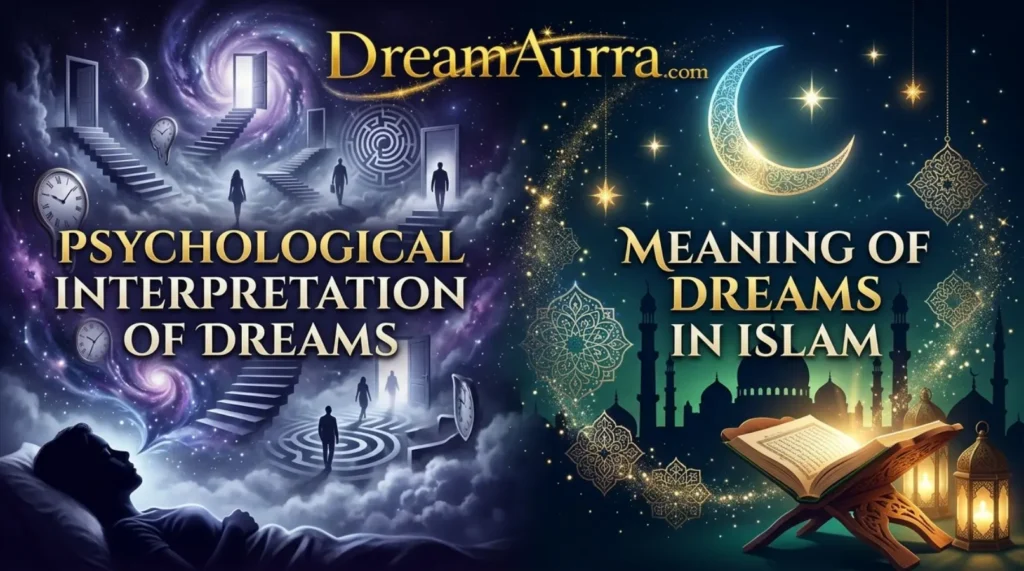
Dreams can also have a strong connection with the subconscious mind. Your brain processes memories, emotions, and experiences during sleep.
For example, dreams may reflect:
- Recent conversations
- Personal worries
- Relationship concerns
- Work or study pressure
- Strong desires
- Fear of losing something
- Memories from the past
- Major changes in life
A frightening dream does not necessarily mean something bad will happen.
Sometimes the dream simply reflects an emotion that needs attention. Understanding your feelings can provide more useful insight than focusing on symbolism alone.
✨ Positive Meanings
Depending on the dream and personal circumstances, dreams may sometimes feel positive or comforting.
Possible positive themes include:
- Hope after a difficult period
- Emotional healing
- Personal growth
- Increased self-awareness
- A renewed sense of faith
- Relief from worries
- Motivation to make positive changes
- Feelings of peace and gratitude
These interpretations are possibilities rather than guaranteed meanings.
⚠️ Negative Meanings
Some dreams can feel frightening or emotionally difficult.
Possible themes include:
- Anxiety
- Fear
- Emotional pressure
- Unresolved conflict
- Guilt
- Uncertainty
- Loss of control
- Stress about future decisions
A negative dream does not automatically mean that a negative event will happen.
Islamic teachings encourage Muslims to avoid becoming overwhelmed by disturbing dreams.
🌿 Common Dream Scenarios
Seeing a Religious Figure in a Dream
Such dreams can feel deeply meaningful. However, interpretation requires careful consideration of Islamic teachings and context.
Do not create religious conclusions from a dream alone.
Dreaming About Death
Death in a dream does not necessarily represent actual death. It may reflect fear, transition, separation, or major emotional change.
Seeing Water in a Dream
Water can have different symbolic meanings depending on its condition and the dreamer’s emotions.
Clear water may feel peaceful, while threatening water may reflect fear or uncertainty.
Dreaming About Pregnancy
Pregnancy dreams can symbolize growth, responsibility, expectation, or something developing in life.
They do not necessarily predict an actual pregnancy.
Dreaming About Snakes
Snake dreams are often interpreted through cultural symbolism. Some people associate them with fear, conflict, or hidden concerns.
However, the meaning depends strongly on the dream’s context.
Dreaming About Someone Who Died
Seeing a deceased person can be emotionally powerful. It may reflect memories, grief, love, or unresolved feelings.
The dream should not automatically be treated as a definite message from the deceased.
🕌 Biblical / Islamic / Cultural Meaning
Islamic teachings recognize that dreams can differ in their nature and significance. Hadith literature discusses different categories of dreams and provides guidance about pleasant and disturbing dreams.
In Islamic tradition, a good dream may be received positively. A disturbing dream should not be allowed to create unnecessary fear.
Classical Muslim scholars also developed traditions of dream interpretation. However, individual interpretations are not always certain or universally applicable.
Different cultures also attach different meanings to common dream symbols. For example, water, animals, death, weddings, and pregnancy can have different cultural interpretations.
It is important to separate established Islamic teachings from later cultural beliefs.
Important: Dream interpretation is not a source of guaranteed knowledge about future events. Only Allah knows the unseen.
⚖️ Is This Dream Good or Bad?
The answer depends on the dream and the circumstances surrounding it.
A pleasant dream may provide comfort or encouragement. A disturbing dream may simply reflect fear, stress, or unpleasant thoughts.
Not every dream needs interpretation.
A useful approach is to ask:
| Question | Why It Matters |
| How did you feel? | Emotions provide important context. |
| What happened recently? | Daily experiences can influence dreams. |
| Was the dream peaceful? | The emotional tone can matter. |
| Was it frightening? | Fear can influence dream content. |
| Is there a repeated theme? | Repetition may reflect ongoing concerns. |
| Are you treating it as certain? | Dreams should not replace sound judgment. |
💭 What Should You Do After This Dream?
If a dream feels meaningful, take a calm and balanced approach.
1. Reflect on Your Emotions
Ask yourself what you felt during the dream. Fear, happiness, sadness, and confusion can all provide useful context.
2. Do Not Panic
A frightening dream does not guarantee a frightening future.
3. Consider Recent Events
Think about conversations, worries, hopes, or experiences from the previous day.
4. Follow Islamic Guidance
If a dream is disturbing, follow the guidance found in authentic Islamic teachings rather than spreading fear.
5. Keep a Dream Journal
Writing dreams down can help you notice recurring themes and emotional patterns.
6. Avoid Making Major Decisions From Dreams
Important life decisions should involve reason, consultation, prayer, and reliable information.
🚫 Common Mistakes When Interpreting Dreams
Taking Every Dream Literally
Dreams often use images and emotions rather than direct messages.
Ignoring Emotional Context
The same symbol can mean different things to different people.
Believing Fear-Based Myths
Online dream interpretations sometimes exaggerate negative meanings.
Treating Dreams as Predictions
A dream should not be presented as proof that a future event will happen.
Confusing Culture With Islam
Not every traditional dream belief comes from Islamic teachings.
Searching for One Fixed Meaning
Dream interpretation is not always universal. Context matters.
🏆 Final Verdict
The meaning of dreams in Islam depends on the type of dream, its context, and the dreamer’s circumstances.
Some dreams may feel spiritually meaningful. Others may reflect daily thoughts, emotions, stress, or memories.
The safest approach is balanced. Respect Islamic teachings while avoiding superstition and fear.
Most importantly, remember that dreams are not a guaranteed way to know the future. Personal reflection, faith, and sound judgment remain more important.
🌸 Conclusion
The meaning of dreams in Islam can be fascinating, especially when a dream feels unusually vivid or emotional. Yet not every dream requires a deep interpretation.
Approach dreams with faith, calmness, and wisdom. Consider your emotions and recent experiences before reaching conclusions.
If a dream comforts you, receive that comfort without making unsupported predictions. If it frightens you, do not allow fear to control you.
Your dream may reveal something about your emotions, but it does not define your future.
❓ Frequently Asked Questions
Is the meaning of dreams in Islam always positive or negative?
No. Dreams can have different sources and meanings. Some may feel positive, while others may reflect fear, stress, or everyday thoughts.
Why do I keep seeing the same dream in Islam?
Recurring dreams may be connected with repeated thoughts, emotions, stress, or unresolved concerns. The repetition does not automatically prove a supernatural warning.
What does the meaning of dreams in Islam say spiritually?
Islamic teachings recognize different types of dreams. A meaningful dream may bring comfort, but interpretations should not be treated as certain knowledge.
Is a dream in Islam a warning?
Some dreams may feel like warnings, but you should not assume every frightening dream predicts danger. Avoid fear-based interpretations.
Does a dream in Islam mean change?
A dream can sometimes reflect feelings about change, growth, or uncertainty. However, the dream itself does not guarantee that a particular change will happen.

Eithne White is a dream meaning writer who explains common dreams, spiritual symbols, and subconscious signs in simple language. She creates easy-to-understand guides about dream interpretations, hidden meanings, and emotional symbolism. Her writing helps readers explore the meaning behind dreams in a calm and beginner-friendly way. At Dreamaurra, Eithne White shares insightful content about dreams, spirituality, and symbolic meanings.